Physiotherapy & Sports Injury Clinics
Marketing for physiotherapy & sports injury clinics
A physiotherapy clinic does not really sell appointments. It sells a course of treatment that somebody has to keep turning up for, and most enquiries arrive from people in pain who want one session to see whether it helps. The clinics that grow are the ones whose first appointment is built to explain the plan, not merely to ease the shoulder.
In short
Marketing for physiotherapy & sports injury clinics in the UK turns on three things that are specific to the trade. An initial assessment in a private UK clinic usually sits between £45 and £70 outside London and £70 to £120 inside it, with follow-ups at £40 to £60. Insurer-funded work is different money: recognised provider rates are set by the insurer, commonly land in the low forties per session, and cannot be raised because you are busy. Google search and the map pack carry this sector. The biggest source of wasted spend is nhs route searches, searches such as nhs physio self referral and physiotherapy waiting list, which has to be negatived out before the budget means anything.
The economics that should drive the budget
An initial assessment in a private UK clinic usually sits between £45 and £70 outside London and £70 to £120 inside it, with follow-ups at £40 to £60. Insurer-funded work is different money: recognised provider rates are set by the insurer, commonly land in the low forties per session, and cannot be raised because you are busy.
The number that matters is the course, not the visit. A typical musculoskeletal episode runs four to six appointments over six to ten weeks, so a self-pay patient is worth roughly £230 to £400 in the first episode, and post-operative rehabilitation blocks run to twelve or sixteen sessions. Clinician cost is the dominant expense — salaried or on a share of fee, it absorbs somewhere near half the appointment price — and room time is the ceiling on the whole business.
So the arithmetic. Say a hundred enquiries produce sixty booked assessments, of which fifty-two attend, and the average episode is 4.5 sessions at £52. That is roughly £12,200 of fee income and perhaps £5,500 of contribution, which values each enquiry at around £55. A cost per enquiry of £18 to £45 is therefore sustainable. Notice where the leverage sits, though: lifting the attendance rate from 75 to 90 per cent moves more profit than any bid change.
Seasonality
Physiotherapy demand is driven by what people are doing with their bodies, which makes it more predictable than most health sectors. January brings a wave of new gym members and returning runners doing too much too soon. February to April is the marathon build, and the injuries that come with it arrive six to ten weeks after training blocks begin. Winter sports trips add a February bump in knees and shoulders, and the football and rugby season carries acute injury from September through to May.
August is the annual low, because patients go away and so do clinicians, and a half-empty diary in August is normal rather than a campaign failure. September is the strongest month in many clinics: schools return, routines restart and autumn half marathons land. The practical response is not to spend evenly: push budget into the six weeks before the local event calendar fills, hold it down through August, and use that quiet period for recall messaging to patients discharged three and six months earlier, which costs nothing per booking.
What we configure
- Separate campaigns for acute pain, post-op rehab and running clinics
- Negatives for NHS self-referral, degrees, CPD courses and vacancies
- Online booking that shows genuine slots inside forty-eight hours
- Call tracking scored on assessments attended, not enquiries taken
- A page per body part, each with the treating clinician named on it
- HCPC registration numbers published on every clinician biography
- Recall messaging at six and twelve weeks after discharge
What people actually search, and what it is worth
| Intent | Typical search | Value | How we handle it |
|---|---|---|---|
| Acute pain, wants an appointment | physio near me, back pain physiotherapy [town], sports injury clinic open saturday | Highest volume, books within 48 hours | Core search campaign on a tight travel radius with the next available slot in the ad copy. This buyer chooses on availability first, so the landing page has to show real times. |
| Named condition or modality | achilles tendinopathy treatment, frozen shoulder physio, shockwave therapy [town] | Longer course, better margin | One ad group per condition pointing at a page written by the clinician who treats it. These searchers have read for a fortnight and respond to specificity, not a generic clinic page. |
| Post-operative rehabilitation | acl rehab [town], knee replacement physiotherapy, rotator cuff repair rehab | Very high lifetime value, low volume | Separate campaign with a higher bid tolerance, because a rehab block is twelve appointments rather than four. Name the consultants you already work alongside on the page. |
| Running and performance | running gait analysis [town], marathon injury physio, sports massage for runners | Medium value, strong repeat rate | Runs well as a seasonal campaign timed to local event entries opening. Route it to a gait analysis page rather than a treatment page, since this buyer is not currently injured. |
Where the budget leaks
Every sector attracts searches that can never become a customer. These are the ones specific to physiotherapy & sports injury clinics, and they go into the negative keyword list before launch rather than after the first invoice.
| Category | Example searches | Why it costs you |
|---|---|---|
| NHS route searches | nhs physio self referral, physiotherapy waiting list, how to get physio on the nhs | Enormous volume and rising with waiting lists. The searcher has explicitly asked for care they will not be billed for, and no ad copy converts that intent. |
| Self-treatment research | exercises for lower back pain, rotator cuff exercises pdf, how to fix tight hamstrings | The largest single category of physiotherapy search volume, and almost none of it books. These readers want a video and a free plan, which is why the clicks are cheap and worthless. |
| Qualifications and CPD | physiotherapy degree, msc sports rehabilitation, hcpc application, dry needling course | Course providers bid aggressively, so these clicks are not cheap. Any clinic running treatment terms on broad match collects them without ever noticing. |
| Recruitment and clinic supply | physiotherapist jobs [town], band 6 physio vacancy, treatment couch for sale, theraband bulk | Job hunters and suppliers use your exact vocabulary plus a town name. Left unblocked they take a meaningful slice of a small clinic budget every month. |
Want this checked against your own numbers?Two minutes on the phone is usually enough to say whether the arithmetic works for a physiotherapy & sports injury clinic business your size.
Call 07443 392243WhatsAppWhat the buyer is actually checking
Somebody searching for a physiotherapist is usually two to six weeks into a problem that has not settled by itself, and has already tried rest, ibuprofen and something they found on YouTube. They want three things answered before they ring: when can I be seen, will this hurt, and how much is the whole thing going to cost. That last question is the one most clinic websites refuse to answer, publishing a per-session price and staying silent on how many sessions a typical case takes. Saying “most people with this need four to six visits” is not a promise of outcome and it removes the single biggest hesitation.
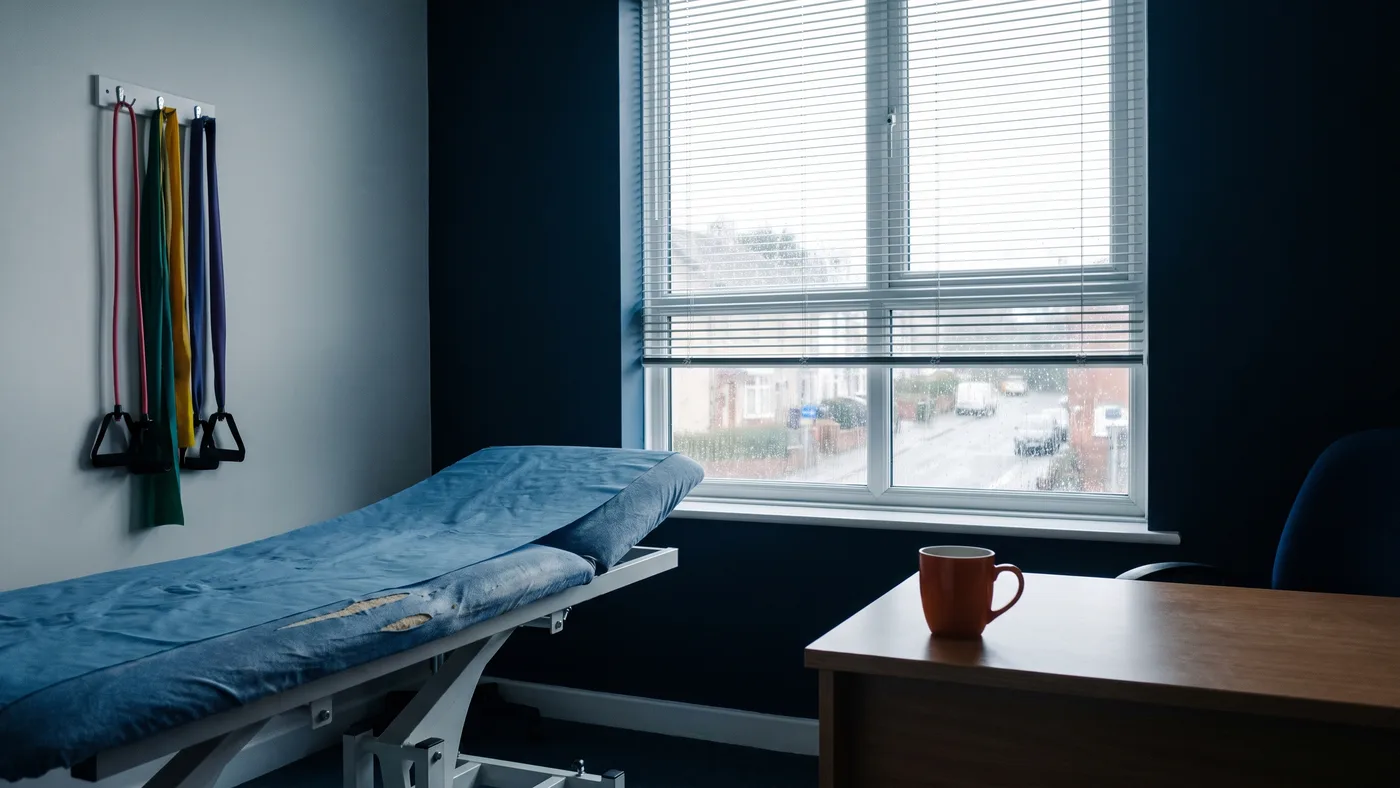
They also check who is treating them. Registration status, how long the clinician has practised, whether they have handled this specific injury, and whether the clinic is one room above a shop or a proper facility with space to rehabilitate. Photographs of the actual treatment room do more work here than any stock image. And anyone with private medical cover checks the recognised provider list first, so it belongs on the site — even when self-pay is the business you are trying to grow.
Which channel wins here
Google search and the map pack carry this sector. Musculoskeletal pain produces a typed, local, urgent search, and Google Business Profile with a steady flow of recent reviews often outperforms the ad account for the ‘near me’ half of demand. Organic condition pages compound unusually well because the questions are stable year after year: what causes a frozen shoulder, how long a hamstring strain takes, whether it is safe to run on shin splints. They rank, they pre-qualify, and they cost nothing per visit once written.
Meta is weak for acute pain because you cannot target somebody's back going into spasm on a Tuesday. It works in two places: promoting classes and group rehabilitation, which are planned purchases, and reaching a customer list of discharged patients, which is the cheapest booking source most clinics own and never use. Performance Max is a poor fit — left alone it finds the exercise-video audience, reports a delightful cost per conversion, and fills the account with people who were never going to pay.
What the rules actually let you say
“Physiotherapist” and “physical therapist” are protected titles in the UK under the Health Professions Order 2001. Only someone on the Health and Care Professions Council register may use them, and using them without registration is a criminal offence rather than a matter of taste. Sports therapists and soft tissue therapists are legitimate professions with their own bodies, but the titles are not interchangeable and ad copy must not blur them. Membership of the Chartered Society of Physiotherapy is voluntary and separate from registration, so it may be stated as membership but never implied to be a licence to practise.
The advertising side is governed by section 12 of the CAP Code. Objective claims about health need documentary evidence held before the ad runs, so “we fix backs”, “guaranteed pain relief” and “cure your sciatica” are all unusable. Advertisers must not discourage people from seeking essential medical treatment, nor offer to treat conditions for which medical supervision should be sought unless that supervision is in place. Testimonials are permitted, but they must be genuine, held on file with dates, and cannot make a claim you would not be allowed to make yourself.
What you can do instead is usually stronger. Describe the assessment process, publish the outcome measures you already collect in clinic with their limits stated, give honest typical timescales, and name the clinician with their registration number. None of that needs a claim about curing anything, and all of it survives a complaint.
Questions from physiotherapy & sports injury clinics
What does a physiotherapy enquiry typically cost in Google Ads?
Across the UK market, clicks on local physiotherapy terms commonly run £1.50 to £5, and cost per enquiry usually lands between £15 and £45 depending on the town. Set that against a course of treatment worth £230 to £400 and the maths is comfortable. Watch cost per assessment attended, which is always higher because a proportion never turn up.
Should we advertise for insured patients or self-pay?
Advertise for self-pay. Insurer rates are fixed, paid slowly and cannot be improved by marketing, so spending to win them compresses your own margin. Being a recognised provider is still worth stating on the website, because it reassures people who have cover and may pay privately anyway, but it belongs on a credibility page rather than in a campaign.
Can we advertise that we treat sciatica or arthritis?
You can say you assess and treat those presentations. You cannot claim to cure them, guarantee relief, or imply that treatment replaces medical care. The CAP Code requires documentary evidence for objective health claims and forbids discouraging essential treatment. Describing your assessment and a typical course length is compliant, and it converts better than a bold claim would.
Are patient reviews and testimonials allowed?
Yes, if they are genuine, verifiable and kept on file with the patient's dated consent. The limit is that a testimonial cannot carry a claim you could not make yourself, so a review saying a clinic cured a slipped disc should not be lifted into an advert. Reviews about the explanation given and the clinician's manner are safe, and they are what readers weigh most heavily.
Related
Talk to a human
Run a physiotherapy & sports injury clinic business?
Tell us your average job value and the area you cover. Two minutes is usually enough to say whether this is worth doing and what it would realistically produce.