Meta Ads · Roofers
Meta Ads for roofing companies, and when not to bother
Roofing revenue splits between work people search for the moment it goes wrong and work they have been putting off for three winters. Meta reaches only the second group. If your book is mostly leaks and storm call-outs, a Facebook budget will underperform your search budget by a wide margin, and we would rather say so now.
In short
Meta Ads for roofers in the UK needs a different build from a generic Meta Ads account, and this is how PipelineOS structures it. Begin by drawing a line down your own sales ledger. On one side sit leaks, slipped tiles, storm damage and anything where the customer rang three firms in an afternoon. The first audience layer is Streets around a finished roof: the actual roof you just finished, shot from the pavement, with the estate named in the caption. The most common way this goes wrong: advertising emergency roof repair on Facebook.
How we build it
Begin by drawing a line down your own sales ledger. On one side sit leaks, slipped tiles, storm damage and anything where the customer rang three firms in an afternoon. That side belongs entirely to search, because the buying decision is made inside a few hours and a feed advertisement has no mechanism for arriving at the right hour. On the other side sit full re-roofs, flat roof replacements, dormer and fascia work, and the ageing concrete tile roof the owner has been eyeing since the last bad winter. That side is where paid social earns money, because those jobs are deferred rather than urgent and deferral is exactly what an advertisement can interrupt.
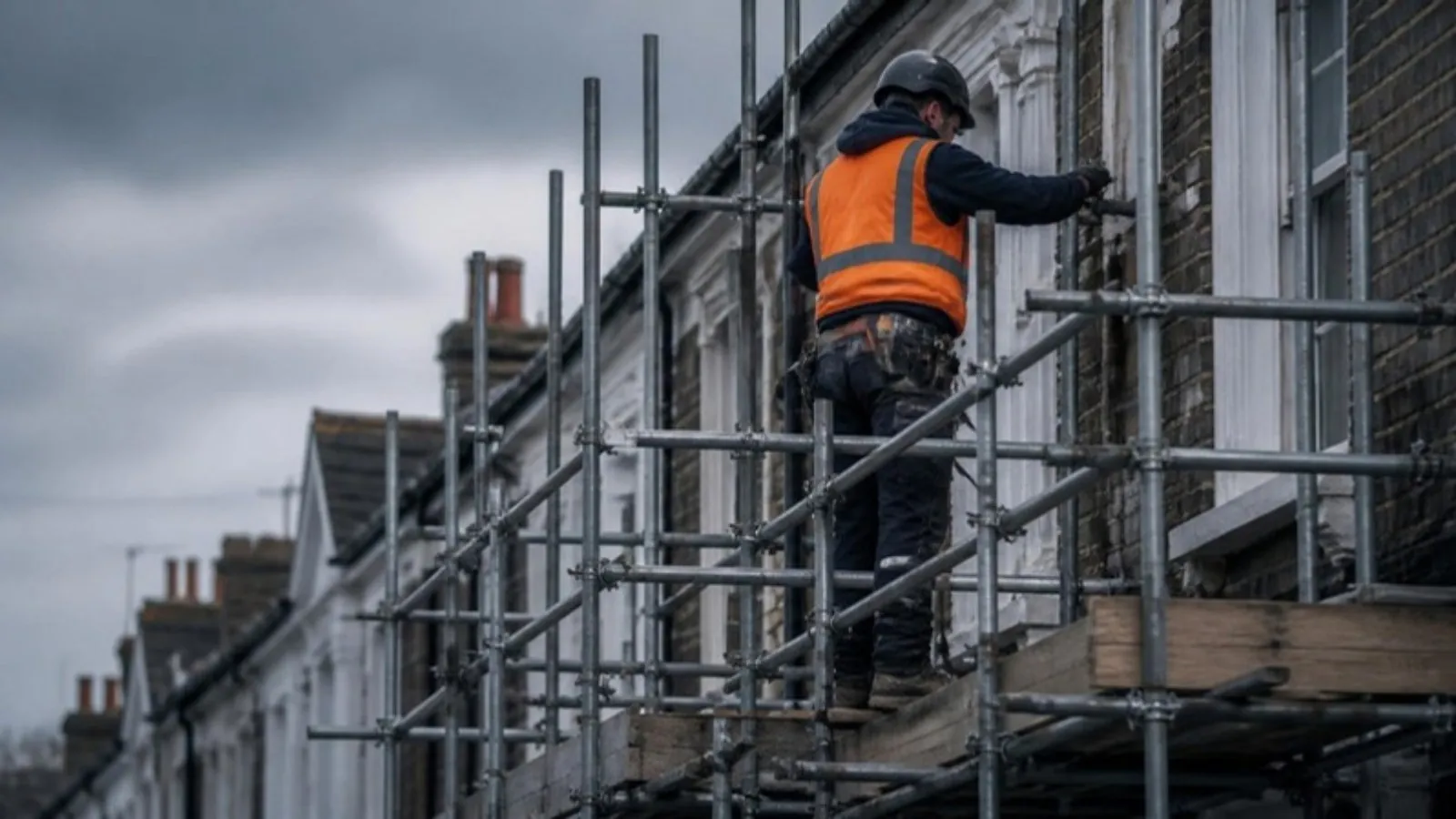
The single strongest mechanic available to a roofer is proximity. When a scaffold comes down and a roof is finished, you have an asset that no stock library can match: a visibly renewed house on a street where two hundred other houses were built in the same decade with the same roof covering. Draw a tight radius round that postcode, run a photograph of that roof with a caption naming the estate and the covering used, and you are advertising to the people most likely to be looking at their own roof and thinking the same thought. This works far better than any interest stack and it requires no clever targeting at all.
Structurally we keep three things apart. Pitched re-roofing runs as its own campaign because the ticket is large and the consideration period runs months. Flat roofing runs separately because buyers there have usually already picked a system and respond to the material being named. Ancillary work — guttering, fascias, soffits, moss treatment — runs as a third campaign with small budget, and it is the one that earns quick money, because almost nobody searches for a fascia replacement but plenty of people would agree their boards look tired if shown a photograph.
On delivery settings: launch broad. Meta's own optimisation, given a clean conversion signal, now finds roofing buyers more reliably than a hand-assembled list of home improvement interests, and interest stacks mostly shrink the auction you can win. Where Advantage+ audience helps here is on the cold campaign; where it hurts is when you let it bleed into your retargeting pools, at which point you are paying prospecting prices to reach people you already own. Keep exclusions explicit and check them monthly.
Audience layers
Three layers doing three different jobs. Skipping the warm and hot layers is why boosted posts disappoint.
| Audience layer | Who is in it | What to show them |
|---|---|---|
| Streets around a finished roof | A one to two mile radius drawn round each completed job, refreshed every time scaffolding comes down | The actual roof you just finished, shot from the pavement, with the estate named in the caption. Nothing else in a roofing account produces a comparable cost per enquiry. Rotate the postcode rather than the creative. |
| Broad local homeowners | Adults 35 plus across your drive-time area with no interest layers at all, left to Meta's delivery system | Age-of-roof education: what fifty-year-old concrete tiles look like when they are failing, what a re-roof costs in bands, what the scaffolding week involves. Judged on video hold and landing page views, not enquiries. |
| Flat roof and dormer viewers | Anyone who watched most of a flat roofing video or read a flat roof page in the last 45 days | System-specific material naming GRP, EPDM or single ply, plus guarantee length. This audience has usually already been quoted once and is checking whether that quote was sensible. |
| Quote page leavers, 90 days | Reached a pricing, gallery or contact page without getting in touch, held for a full quarter | Process rather than persuasion: survey, written quotation, payment stages, what happens if the felt underneath is worse than expected. Re-roof buyers stall on fear of the unknown cost. |
| Previous customers and their neighbours | Your own customer list uploaded, plus the radius audiences around those addresses, with the customers themselves excluded | Gutter, fascia and moss work rather than another roof. A house you re-roofed four years ago is the cheapest source of a small job you will ever advertise to. |
Running Meta Ads for a roofer business already?Send us view access or a screenshot and we will tell you what we would change first, at no charge.
Call 07443 392243WhatsAppBudget and the arithmetic
A regional roofing firm usually finds the floor at around £500 a month of ad spend. Below that the proximity campaigns cannot cycle through enough postcodes to matter and the retargeting pools never fill. Most accounts that work settle between £600 and £1,800 a month, with the majority sitting on cold prospecting and a standing minority reserved for the people who have already looked at the site.
Now the honest part about what a Meta enquiry is worth. A re-roof is a large job, which tempts firms into tolerating a large cost per enquiry, and that logic holds only if the enquiries convert. They convert worse than search enquiries do, because the person did not go looking for you. Plan on needing appreciably more Meta enquiries than Google enquiries to produce the same number of signed contracts, and track the two sources separately in your CRM or you will never see the difference. Our cost per lead calculator lets you run both conversion rates side by side before you commit money.
On published numbers, be careful. WordStream and LocaliQ's 2025 Facebook benchmarks put the all-industry median cost per lead at $27.66, but that leads-objective cut rests on just 726 campaigns spread across fifteen industries in United States dollars, which is far too thin a sample to plan a British roofing budget against. There is no published independent UK cost-per-lead benchmark by industry for Meta at all. Use your own first sixty days as the benchmark and treat everything else as background reading on the benchmarks page.
Four ways this goes wrong
- Advertising emergency roof repair on Facebook. The person with water coming through a ceiling is typing, not scrolling, and you have bought attention that expires before the job exists.
- Letting the scaffolding come down without photographing the finished roof from the pavement. That one photograph is the most valuable advertising asset a roofer generates all year.
- Building elaborate interest stacks around home improvement and DIY. Broad delivery with a clean conversion signal beats them in almost every roofing account we have taken over.
- Judging the account on a thirty day view when a re-roof decision takes two or three months. The enquiries from week two are still collecting quotes when you switch the campaign off.
- Running one campaign covering pitched, flat and guttering work. Three price points and three buyers averaged into creative that convinces none of them.
The two pages behind this one
This page is the intersection. For the wider picture:
Questions
Should a roofer run Meta at all?
Only if a real share of your turnover comes from planned work. A firm that lives on repairs, call-outs and insurance jobs should put every pound into search and local visibility first, and we will say so on the phone. Once planned re-roofs and flat roofing are a third or more of the book, paid social starts making sense, and the proximity campaigns make sense before anything else does.
Does the storm effect work on Facebook the way it does on Google?
No, and this catches people out. Storm demand is a search phenomenon: people type the moment the tile lands in the garden. What Meta can do in a storm week is reputational rather than transactional. Sensible posting about what to do while waiting, which damage is insurable and why a stranger knocking the door is usually a warning sign, builds standing you will cash in later.
What creative do we actually have to produce?
Photographs of your own finished roofs from street level, and short phone footage from the scaffold. That is the whole requirement, and it is also the whole difficulty, because it has to keep coming. A feed consumes material in a way search never does. If nobody on your team will reliably take twenty seconds of video before packing up, the channel will not work for you.
Is it worth retargeting people who came from Google?
Yes, and for many roofers this is the highest-return part of the whole budget. Most people who read a re-roof page leave without ringing. Putting the finished jobs back in front of them for a few pence a view across the following quarter recovers a meaningful slice, and it costs a fraction of what the original search click did.
Related
Also worth reading
- Buying roofing leads, and what they really costWhat a bought lead actually costs per won job.
Talk to a human
Meta Ads for your roofer business
Tell us the area you cover and your average job value. We will say what is realistic before you spend anything.