Derby
Marketing agency for Derby trade & construction firms
Derby is an engineering city first and a housing market second, and the firms doing best here sell to plants rather than to homeowners. We are based in Hampshire and work with Derby firms remotely; we will not pretend that site visits are part of the arrangement.
In short
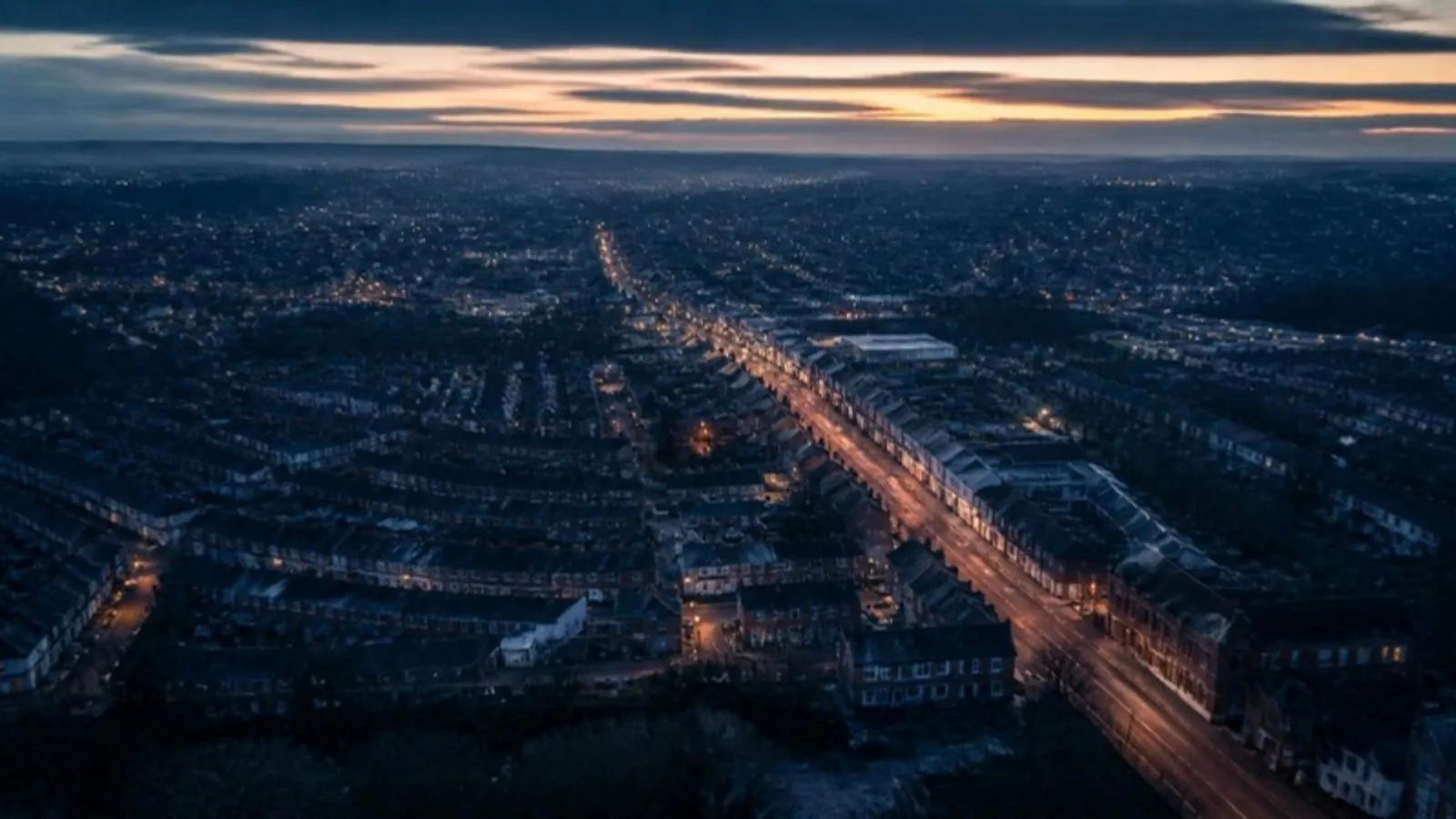
PipelineOS is a UK lead generation agency working in Derby, running Google Ads, Meta Ads, SEO and AI search for trade and construction firms there. Derby is an engineering city and it does not pretend otherwise. Aero engine manufacture and its supply chain anchor the local economy, rail engineering has been carried out here for the best part of two centuries, and the wider area carries automotive manufacturing and its associated tier of component suppliers. Search competition is light. Industrial mechanical services is one of the stronger trades in Derby: manufacturing premises need pipework, ventilation and plant maintenance carried out under permit systems that exclude casual competitors.
An engineering economy that buys building work on a shutdown calendar
Few cities of this size have such a concentrated industrial base. Aero engine manufacture, rail vehicle building and maintenance at Litchurch Lane, automotive production nearby and the long supply chain feeding all three give Derby a dense population of large industrial premises and the specialist trade demand that goes with them: industrial roofing and cladding, resin and heavy-duty floors, machine bases, extraction and compressed air services, mezzanines, drainage, fire compartmentation and continuous planned maintenance. Selling into it is a procurement exercise. Contractors are inducted, permitted and audited, insurance levels and accreditations are checked before anyone quotes, and much of the work can only happen during shutdown windows when production stops. That last point reshapes the whole marketing year: enquiries cluster ahead of planned closures, and a firm that understands the calendar is worth more than one that simply advertises.
Housing is mixed and comparatively unglamorous. Victorian terraces run through Normanton, Peartree and Litchurch with a substantial rented layer; interwar and post-war semis fill Chaddesden, Alvaston, Mackworth and Sinfin; and the higher-value suburbs of Allestree, Littleover, Mickleover and out towards Duffield buy planned improvement rather than repair. There is a heritage edge to the north where the Derwent valley mill villages and the towns towards Belper and Ashbourne carry stone, slate and conservation constraint, and the Peak District beyond that adds rural and holiday-let work. None of it is as distinctive as the industrial market, which is where the money and the repeat business are.
Under-contested, and largely ignored by agencies
Derby is one of the quietest search markets of its size in England. Regional agency attention concentrates on Nottingham and Leicester, the local trade websites are mostly thin, click costs are low, and the map pack moves for firms that build reviews steadily. Directories still hold visible positions on several trade terms, which is usually a reliable sign that a real business can displace them. There are incumbents on the obvious phrases, but not the entrenched, review-heavy incumbents you meet in a bigger city.
The largest opening by some distance is business-to-business. Almost no trade firm here presents itself credibly to a maintenance engineer or facilities manager, and the ones that do face virtually no competition in search. That means credential-led pages, accreditations, out-of-hours response, shutdown availability and comparable works rather than free-quote language. Beyond that, the surrounding towns — Burton, Belper, Ripley, Swadlincote, Long Eaton and Ashbourne — search separately and are quieter again.
What we would prioritise in Derby
- Build the industrial offer first. Plants and depots are the repeat, high-value buyer and nobody markets to them well.
- Plan around shutdown windows. Weight budget towards the periods when plants can actually let contractors in.
- Take organic seriously. These SERPs are soft enough that consistent publishing and reviews will move them.
- Add the ring towns. Burton, Belper, Long Eaton and Swadlincote are cheaper again than Derby itself.
Trades we know best
Scaffolding · Roofing · Glazing · Construction & groundworks
What actually drives trade demand in Derby
Derby is an engineering city and it does not pretend otherwise. Aero engine manufacture and its supply chain anchor the local economy, rail engineering has been carried out here for the best part of two centuries, and the wider area carries automotive manufacturing and its associated tier of component suppliers. The concentration of high-skilled engineering employment gives the city an income profile well above what its house prices suggest.
That has a specific consequence for trade firms. A large share of the local commercial estate is manufacturing and testing premises with security controls, clearance requirements and strict working procedures. Getting inside those gates is difficult, which is exactly why the firms who manage it are not easily displaced. Documented safety performance, accreditation and the ability to work to a permit system matter more than any marketing message.
Domestic Derby is a mix of Victorian terraces close to the centre, interwar and post-war suburbs, and newer estate development on the edges. Household incomes support real discretionary spending, and the countryside immediately north of the city, running up the Derwent valley towards the Peak District, contains substantially higher-value property with stone construction and conservation constraint.
The competitive picture
Search competition is light. Derby is smaller than its neighbours, its agency scene is modest, and the trade results are held by long-standing firms rather than by well-optimised ones. For a business willing to build a proper site and gather reviews systematically, this is among the more winnable markets covered here.
The caution is volume rather than rivalry. Monthly search demand for many trades will not fill a serious paid budget on the city alone, so campaigns need to take in Burton, Ilkeston, Ripley and the Derbyshire towns. There is no published figure anyone can honestly quote for what that traffic costs, but the direction is consistent: cheaper than Nottingham, considerably cheaper than Birmingham, with correspondingly less of it available.
Working radius
The A38, A50 and M1 give good reach east and south, so Burton, Nottingham, Loughborough and Uttoxeter are all straightforward. North is a different matter: the road network up the Derwent valley is scenic and slow, and jobs in the Peak fringe villages take much longer than their mileage implies. That is worth pricing explicitly rather than absorbing, because those are also the higher-value jobs.
Which trades do well here
| Trade | Why, in this city specifically |
|---|---|
| Industrial mechanical services | Manufacturing premises need pipework, ventilation and plant maintenance carried out under permit systems that exclude casual competitors. |
| Stone building repair | The Derwent valley and the Peak fringe carry gritstone property needing traditional repair and lime work rather than modern substitutes. |
| Roofing and rainwater goods | Victorian terraces near the centre and estate housing further out give a steady mixed workload at accessible job values. |
| Security and access installation | Controlled sites and engineering premises buy fencing, gates and access control from contractors they have already vetted. |
| Extensions and conversions | High engineering incomes against relatively modest house prices produce more improvement spending than the property values imply. |
The Derwent valley immediately north of the city is a World Heritage Site, recognised for the mills where factory production effectively began. That brings listed building status, conservation constraint and a specific expectation about materials to a stretch of ordinary-looking Derbyshire villages, and it sits just far enough outside Derby that firms based in the city frequently do not realise what they are quoting on until consent becomes an issue. Knowing where that boundary falls is a genuine local advantage.
Questions from Derby businesses
Are you actually based near Derby?
No, and we would rather say so than pretend. We are in Chandler's Ford, Hampshire, and we work with Derby firms remotely — which is how search advertising and SEO are run in any case, because the account does not care where the person managing it sits. What we do not have is an office in Derby or someone who can be on your site on Tuesday. If that matters to you, hire locally, and we will say the same on the phone.
Do I have to sign a contract?
No. Everything ongoing is month to month. If a month goes badly you can leave, which is a considerably stronger incentive for us to perform than a twelve-month contract would be. You also keep every account, asset and file on the way out.
Who actually does the work?
One person, and you speak to him. There is no media buying team and no account management layer, which caps how big this can get and means the person who sold you the work is the person in the account on a Tuesday morning.
Will you work with a competitor of mine?
Not in the same trade in the same area at the same time. If we are already running a roofer in your patch we will tell you on the first call rather than take both and quietly bid you against each other.
Other areas we cover
Fifteen cities, not four hundred towns. Generating a page for every settlement in Britain takes about ten minutes and is worth nothing — Google has treated that as spam since 2024, and pages like it routinely fail to rank even for their own exact-match title. These are markets we can say something true about. We work with clients across the whole UK and Ireland whether or not their city appears here.
Talk to a human
Working in Derby?
Tell us your trade, your average job value and the area you actually want work from. Two minutes is usually enough for a straight answer.